Ireland
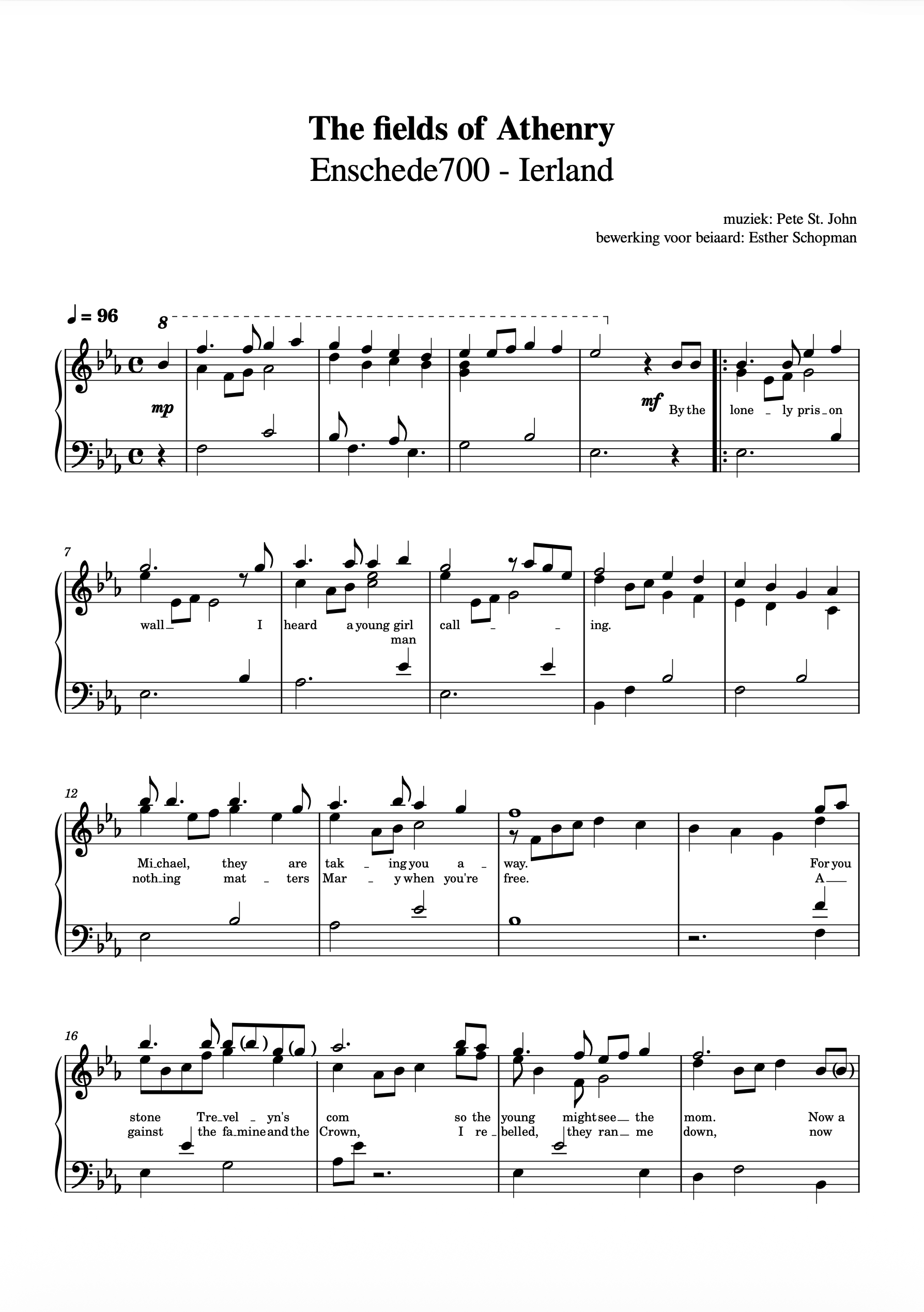
The Fields of Athenry
Ireland
The Fields of Athenry
Louise Steenhuizen

“The Fields of Athenry” centers on exile, displacement, and the feeling of being trapped in circumstances beyond one’s control. It tells the story of a young man, Michael, who is arrested during the Great Famine for stealing grain to help his starving family. When he is deported to a penal colony in Australia, the song expresses the sorrow of separation between him and his beloved. However, the song is not only about the arrest of one man; it also reflects how ordinary people suffer under larger political and economic forces. The separation between the couple symbolizes the breaking apart of families and communities.
This is a song that every Irish person can sing along to. It is loved in Ireland because it creates a strong sense of togetherness. “The Fields of Athenry” has become a familiar part of Irish community life: it is often sung en masse at sporting events, in pubs, and at the end of parties when a singalong begins. The melody is easy to follow, allowing even large groups to perform it effortlessly together. Through these shared moments, the song has grown into a trusted and emotionally meaningful symbol within modern Irish culture.
For me, “The Fields of Athenry” represents community and a shared history. It embodies the Irish spirit of rebellion and the way those who were oppressed maintained their dignity and pride. It helps the Irish people remember our history and struggles, and how we respond to injustice in the world around us today.
Myn name is Louise Steenhuizen. I was born and raised in Dublin. I have lived in the Netherlands since 2007, first in Utrecht and since 2013 in Enschede-Noord. I am married to a man from Enschede, and we have one child together.
 English
  Nederlands